
When I was employed as a swim coach in my younger days, I found myself in a situation I simply could not accept (no pun intended). I disagreed strongly with the idea of bulimia as a weight-loss strategy, so I left my position.
At that point, my “team” was reduced to one coach and one swimmer—my girlfriend, who had stayed by my side through my transition from swimmer to coach, and now from employed to unemployed. With the optimism of youth, we decided to strike out on our own. My next step as her coach, since she was a sprinter, was to dive into research on sprint training.
It was January, and the Commonwealth Games were scheduled for September. She was ranked 9th in the Commonwealth, and our goal was to make the final in the 50m freestyle.
I discovered a small public pool called Renfrew Pool where the staff kindly let me coach during open swim hours. To my surprise, I couldn’t find a single book dedicated to sprint swimming to begin our specific sprinting journey. As a history major, research was second nature to me, so this lack of resources was an eye-opener. Expanding my search, I came across books on speed training in general, but none written specifically for swimmers. If these sources were correct, then much of what we had been doing in the pool was completely wrong for speed development.
After several months of working independently, I landed a new coaching role with a very small team. In the end, we had only needed to rely on public swim time for about six months.
One unexpected advantage we had as a British national team swimmer training in western Canada was distance. The governing body in Britain required her to submit training programs by email, but their prescribed sessions were geared toward distance swimmers. So we embellished the meters and fabricated results for their test sets, while in reality, we designed and executed our own sprint-based program.
The local 25m pool, however, was bursting at the seams with every imaginable activity—swim lessons, synchronized swimming, masters, public swim, you name it. Pool time was our biggest challenge.
I sat down with the pool manager, who showed me her complex spreadsheet of lane allocations. There was no room left. I asked, “What if we trained 5–7am?” She agreed.
When I presented the idea to my senior squad, I admitted that 5am was early. But I reminded them: when the clocks change, 6am suddenly becomes 5am, and no one complains. Framing it that way, they bought in—and I was pleasantly surprised.
Each morning after pool time, we did circuit training, medicine ball work, and stretching. In the afternoons, swimmers chose three days per week to lift weights at a time that suited them—right after school, after dinner, whatever worked. Parents appreciated the flexibility.
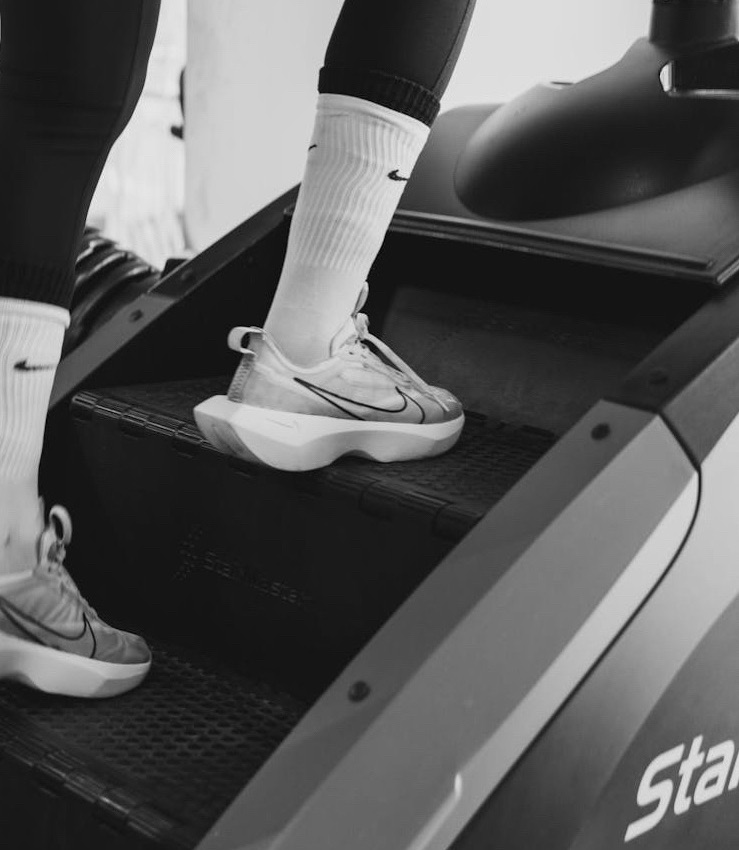
We also moved much of her aerobic training out of the pool to avoid overuse injuries and give her swimming muscles a break. Sprinters loathe long swims anyway, so she happily spent hours on the stairmaster, sweating to terrible music.
That September, not long after starting my new coaching role, I took a holiday to Kuala Lumpur to watch the Commonwealth Games 50m freestyle.
She won silver. We had only hoped to make the final, so a medal was beyond our wildest expectations. It was the first international medal she ever won—eventually growing into 23 by 2004—and the first international medal by a female swimmer from her country since the 1950s.
Her progress was remarkable. Before this, she hadn’t swum a personal best since she was 15 years old. Now, pushing 30, she was recording one best time after another.
So what’s the moral of this story? In the 1990s and early 2000s, many coaches still clung to the training philosophies of the 1960s and 1970s: whoever swam the most mileage would become the fastest. But that model had reached its limits. Our experience showed that the future of swimming lay not in endless laps, but in the science of exercise physiology—and in daring to break from the old ways.

Do you want to join in the discussion with Gary? Join in his Skool and get started: https://www.skool.com/performance-swim-strokes-6754/about


 swimcoachingblog