
For many swimmers, one of the most frustrating aspects of front crawl is the kick. A weak or inefficient kick can hold a swimmer back, no matter how strong their arms are. While the front crawl kick looks deceptively simple, it’s actually a finely tuned skill that takes time and practice to master.
Young swimmers often develop a feel for movement in the water early on. Through natural experimentation, they discover that moving their legs in certain ways propels them forward—much like how a baby figures out crawling (no pun intended) and subsequently walking.
A beginner’s process often goes something like this:
- Try a movement → go backwards, sideways, or nowhere.
- Try another → move forward.
- Deduce: “That’s the one that works—keep doing it!”
This trial-and-error approach might result in several different kicking styles:
- A sweeping up-and-down movement, like a fin or fan.
- A breaststroke-style kick, using one leg at a time and in sweeping.
- A bicycle-style kick, resembling pedaling.
All of these can move a swimmer forward to some extent—but if the goal is to become a competitive swimmer, the fan-like flutter kick is the most efficient and fastest.
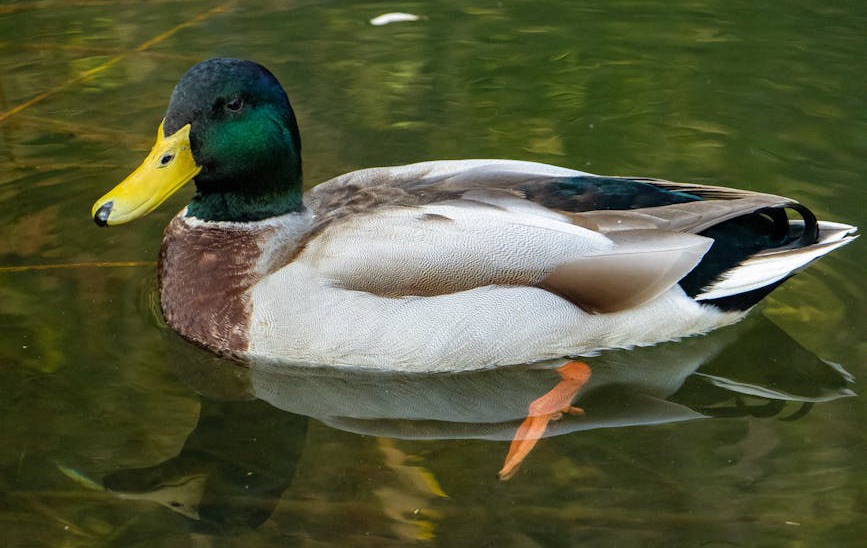
The bicycle kick often appears in beginners and is easy to recognize. Underwater, it looks just like walking, running, or even how a duck paddles forward. Watching a child kick underwater is essential for swim teachers—it reveals how the sole of the foot presses backward, and the knee lifts forward, repeating in a cycling motion. A swim teacher without goggles at-the-ready is incompetent.
While this instinctive bicycle movement works, it’s not ideal for front crawl efficiency.
This natural phase of experimentation is often skipped when someone learns to swim later in life. Adults tend to expect immediate results—and when the kick doesn’t move them forward, frustration sets in. Kicking with toes pointed down, for example, generates little to no propulsion.
Fear of failure or embarrassment can make it even harder to persist. Holding a kickboard and kicking like mad, going nowhere, is obviously disheartening. But overcoming that discomfort is part of the learning process. To develop a powerful kick, you must allow yourself to experiment, make mistakes, and feel awkward at first. Like a toddler learning to walk, you have to be relentless until you succeed.
When practicing with a flotation aid, like a kickboard or pool noodle, the focus should be on creating a smooth, sweeping motion like a fan from the hips—not a stomping or walking motion from the knees. Unlike anything we do on land, an effective flutter kick relies on relaxed ankles, pointed inward toes, and rhythmic movement.
That’s the key: learning to use your legs in a way completely different from how you use them on land. Once a young child I was teaching, after I asked them to watch my kicking under water, said ‘it looks like you don’t have any bones in your feet!’.
So…how do you do it? Place an object on the bottom of the pool, then with a sweeping or fanning motion try to move that object with the force of your foot moving the water. Then you are doing the movement correctly. If you can’t move the object, you are not sweeping in a way that propels water towards it, and so, you won’t be able to move in the opposite direction once you are floating.
If you would like more mentoring with Gary Vandermeulen please sign up to Skool at


 swimcoachingblog