
Sprinters are unique individuals and need correct training to improve their natural talents. It is well reported in Australian media that Cam McEvoy was on the verge of quitting swimming in 2021 when he decided to try a new plan. He was training like an endurance swimmer and logic told him it was wrong. McEvoy loves logic since he is a mathematician.
McEvoy took a step that very few other swimming sprinters took; they looked at what other sports were doing. He looked at the sprint cyclist’s programme in Great Britain as well as track field events. He began to follow the basics that Exercise Physiology had been proving for a long time. Luckily for McEvoy, the Queensland Institute of Sport had already recruited strength and conditioning coaches from the UK which supported McEvoy and his coach Tim Lane.
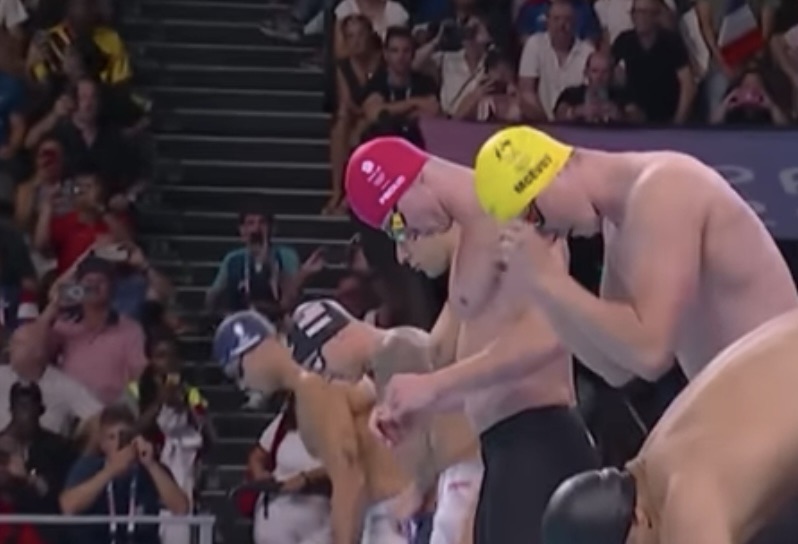
The sprint programme of the cyclists is not easily summarised in one paragraph but to simplify he began to train to become a better sprinting all-round athlete and not a just a swimmer.
One of the main things that true sprinters do is to never train speed at the end of a practice. Speed work is done fresh so that true top speed can be attained. Warm up, sprint. Recover. It was measured carefully and recorded to be replicated.
To attain true speed a swimmer should rest between swims and not swim easy between sprints. The energy (creatinine) that needs to be replenished in speed work requires inactive rest.
Another aspect is the total volume of sprinting. Sprint coaches know that a combined total of 80s of sprinting should be the total. That means not sprint more than 200m (8x10s), the total combined sprint distance. So speed should not be trained the same way that aerobic swimming is trained. Adaptation is attained by intensity not volume.
When he did his work it was pure effort. Never sprint at less than 100% effort. For adaptation to occur their true maximum effort in weight room or swimming must be honest.
Rest is important and without it you can not improve. So sprinters shouldn’t sprint more than once per 24hrs. Recovery between speed sessions is essential.
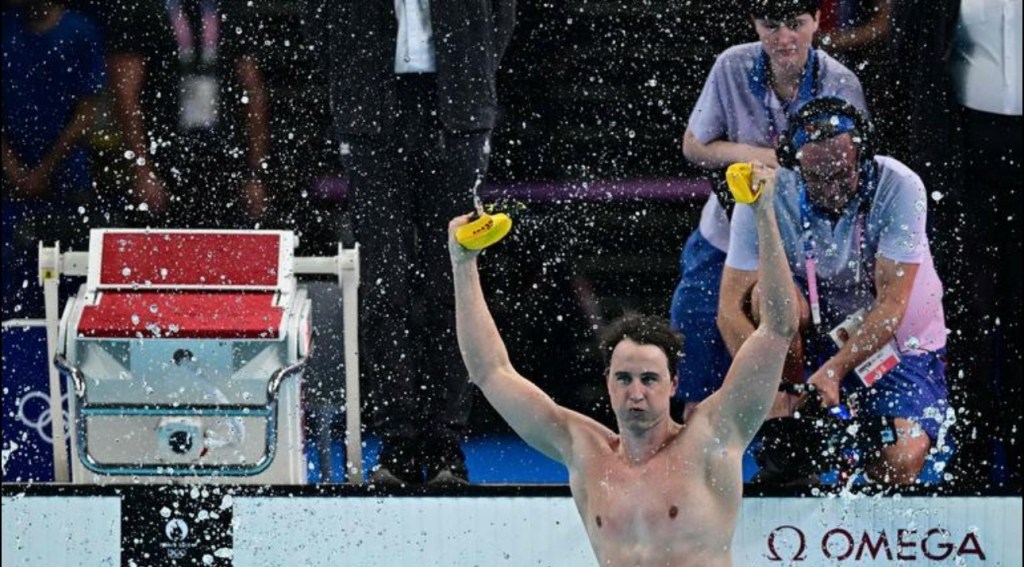
McEvoy swam as little as 3km per week. So his pool work never would have had less than a ratio of 1:16 work to rest ratio during speed work. The amount of rest required is quite long which is why most coaches ignore this side of proper speed training. Most coaches only monitor total volume.
Speed training can be very specific and McEvoy used electronic timing to improve his work off the blocks. He did this with the QIS Physiologist. Speed work shouldn’t exceed 10s since the first energy system only lasts that long. McEvoy was able to swim the majority of his programme in a 25m pool.

Training should be enjoyable and McEvoy included things like rock climbing and callisthenics in addition to weight training. In this way staying physically fit but resting his swim specific muscles. If McEvoy was following the same programme as Chris Hoy (6x Olympic gold medalist sprint cyclist) and began doing Olympic lifting. At the University of Stirling the head of Physiology Support devised Hoy’s programme based on Olympic lifting.

This type of training may seem revolutionary in swimming but it is not unusual outside the pool. However this type of training I am familiar with; it is the same style of preparation that was followed by Scottish swimmer Alison Sheppard in her lead up to posting world leading time in 50m free in 2002 (:24.68). She too was a 3x Olympian and was ready to quit. She had not posted a PB in the previous 10yrs before starting a sprint specialist training in 1998. McEvoy’s journey is surprisingly familiar to Sheppard.
McEvoy used his love of numbers as a mathematical minded person to look to other proven methods and came up with gold!
Side note: Congratulations to all competitors making the final in the 50m freestyle in Paris 2024!
If a you want a FREE game to laminate and use as a warm up. CLICK HERE
Do you want to join in the discussion with Gary? Join in his Skool and get started: https://www.skool.com/performance-swim-strokes-6754/about


 swimcoachingblog
Pingback: Where Are The Sprint Swimming Coaches In Paris 2024 | swimcoachingblog