‘If you build it, they will come’; might work for fans but it doesn’t work for learning. You need to go find it or get pointed in the right direction.
Swimming is very different from every day life. It exists in a strange horizontal plane. Gravity pulls us down in the air realm but our bodies make us buoyant in the water world floating us on the surface.
How to move whilst between the water and air world is not innate, we are not born with this skill, it must be learned. Aristotle once said a proper education must include learning to swim.
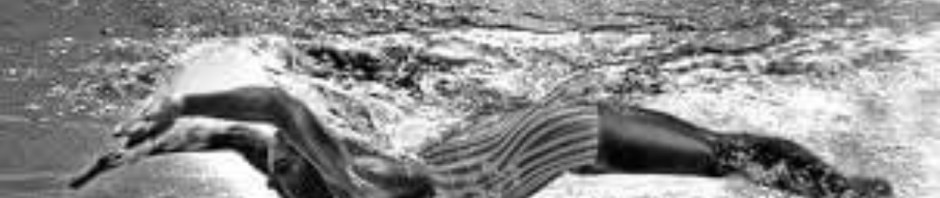
Watching and copying is a very good way to figure out anything kinaesthetic. As a youngster, I tried very hard to copy a senior swimmer on my team called Graham Schnarre. The first time I saw him gliding up and down in such a graceful and powerful way; I had to learn how to do this thing called butterfly. He was around 17 or 18 years old and I was about 9. At every chance I could, when I was in the pool at the same time as him, I would try to watch him.
Moving around becomes exceedingly hard in this buoyant but heavy environment, especially in the way a butterflier does it.
For a coach, explaining something that is unusual, in an alien environment, like swimming, is not easy to do. Words like ‘kick’ and ‘pull’ won’t suffice, so every mode of ‘getting it across’ must be used.
Sometimes the results of your description does not show improvement… but the student is not the issue. Repeating the same commands will not get improvement, something more memorable must be added. Observation is the king of learning. Every coach should encourage it.
Mimicry, I have found, both in learning and teaching, has worked well for me. I strongly believe that mimicry is pivotal to learning. It should be used first rather than as a last resort.

Early in your life, before you could communicate with language, no one told you how to walk… but you figured it out.
If you can’t understand language like a 12month old, it must mean you ‘got it’ by some other mechanism. I think mimicking is innate, even if swimming isn’t.
Observation alone is not mimicking. To mimic you need to observe with the intention to try. Then you are mimicking.
Mimicry implies a link between observation to doing. What does it feel like to do that? Mimicry is curiosity embodied. Trying to copy, trying to feel the way it must feel, to that which was observed.
Not everyone has an amazing coach that can communicate eloquently. Or draw swimming diagrams better than artist-coach Milt Nelms. However it doesn’t matter because a way to learn is easily at hand: mimicking.
Coaches must either get in the pool to teach or recruit an older swimmer to demonstrate. That is the quickest way to get your swimmers to learn.

Do you want to join in the discussion with Gary? Join in his Skool and get started: https://www.skool.com/performance-swim-strokes-6754/about


 swimcoachingblog