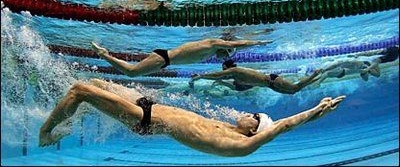
A person who turns their foot outward during the downward kick sweep, like a breaststroker, in their front-crawl kick is very ineffective. It’s a fairly common problem, and it seems to happen to swimmers who are natural breaststrokers.
This odd addition to the kick cycle in front crawl can be hard to change. It affects a swimmer’s ability to generate propulsion, sprint, and change tempo. So, at the end of a distance race, for example, that swimmer may struggle to speed up and win a close race.
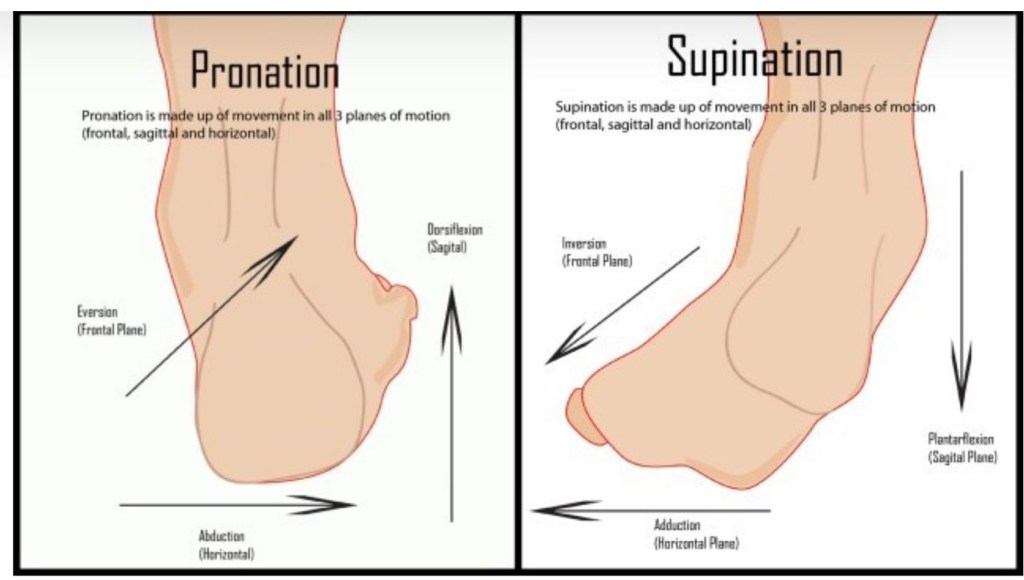
Kicking correctly requires both plantar flexion (think of a ballerina on tiptoe rather than someone standing flat-footed) and an inward turn of the feet (supination).
One way I’ve found to help change a non-standard kick—a pronated foot position and a continuous pronating kick—into a strong six-beat kick is to use backstroke kicking.
I’m not a big proponent of backstroke kick in its standard form, because it’s not what it says on the tin; kicking up and down on your back is front-crawl kicking, not backstroke. I’ve found it’s a useful tool for improving front-crawl kick.
A true backstroke kick has a distinctive side-to-side switch that allows the shoulders to twist. However, backstroke kicking in the traditional way—with the arms in streamline and the legs kicking only up and down—has a brilliant use: it can fix a front-crawl kick!
If a swimmer kicks correctly, they have an inward plantar flexion, also called a “pigeon-toed” kick. This is supination. It allows the ankles to bend and provide great propulsion. All great kickers do this—except breaststrokers.
If a swimmer kicks on their back with their toes pointed inward (supinated), and their big toes sometimes touching as they sweep past each other, the telltale sign is the plume of water as they kick up. If the plume is directed toward the center, the foot is shaped correctly. If it flicks outward, the foot is kicking in a pronated way.
With their head raised and arms at their sides, swimmers can watch the plume of water from their kick. They should aim to create a consistent mound or dome of white water in the center. This indicates a good kick, and they can then work on incorporating it into front crawl.
I’ve used the following steps successfully if you think your swimmer is kicking incorrectly, in a pronated way:
- On back, arms at sides, kick and observe where the plume is directed.
- While watching their kick, have them direct the plume toward the center with both feet by supinating.
- While kicking correctly on their back, have them roll onto their front. They should try to maintain the same kick intensity, feel, and style.
- Progress to a catch-up drill to allow for breathing and integrate the arms with the correct kick. Focus on keeping the kick consistent, without pausing or adding a breaststroke-like action. If the incorrect kick returns, have them roll back onto their back.
- Take catch-up drill to half-catch-up drill.
- Progress to full stroke.
This progression has helped some of the swimmers I’ve worked with to change their Breaststroke style Frontcrawl kick.