In ancient Greece the Olympians fought, threw, ran with weapons and raced chariots against other men from other countries. This competition created such a strong military force for each nation that it literally saved the Greek world from becoming a Zoroastrian state. The Greek world survived for over a thousand years giving us art, literature, sculpture, astronomy, democracy, libraries, mathematics, medicine, theatre and of course an impetus for the revival of the modern Olympic Games.
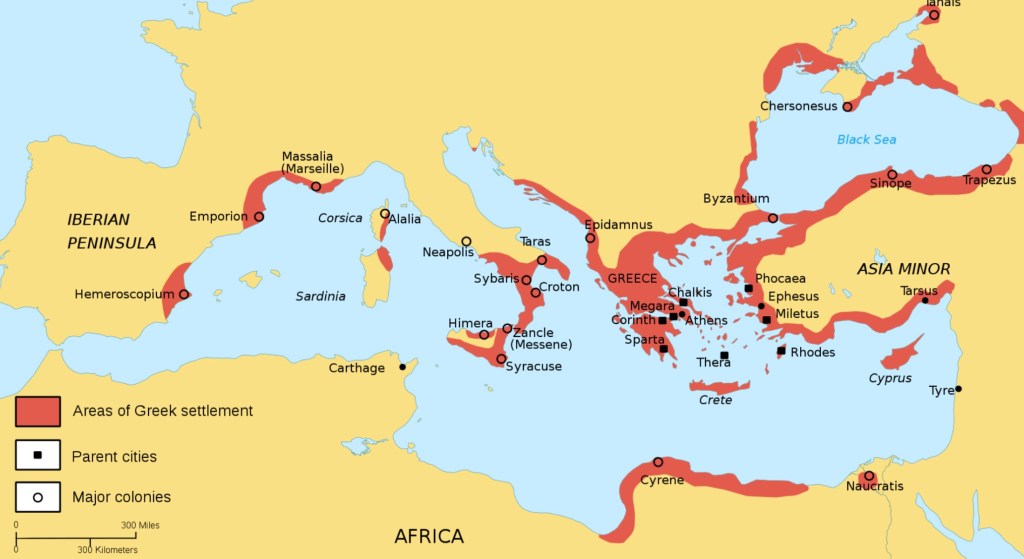
Greek city states were tiny countries around the coast of the Aegean Sea and expanded around the Mediterranean. Each city-state expanded by starting villages in Sicily, Italy, Egypt, along the African north coast, along the Black Sea coast and throughout the Aegean Sea. They competed each other for supremacy in commerce. This was in the centuries before BC became AD.
Besides their commercial competitiveness and constant fighting, they had a common religion; they worshipped Zeus and their pantheon of gods. This created a cross-nation cooperation that was unique. Their religious festivals, like the festival of Zeus at Olympia, motivated a common truce to allow travel for attendance.
The Hellenistic cultures flourished in this environment of regular quadrilateral peace, historians labelled this time as the golden age of Greek antiquity. Competitions began with running events, which piggybacked on the festival of Zeus in 774BC. Even today we are impacted by their legacy.
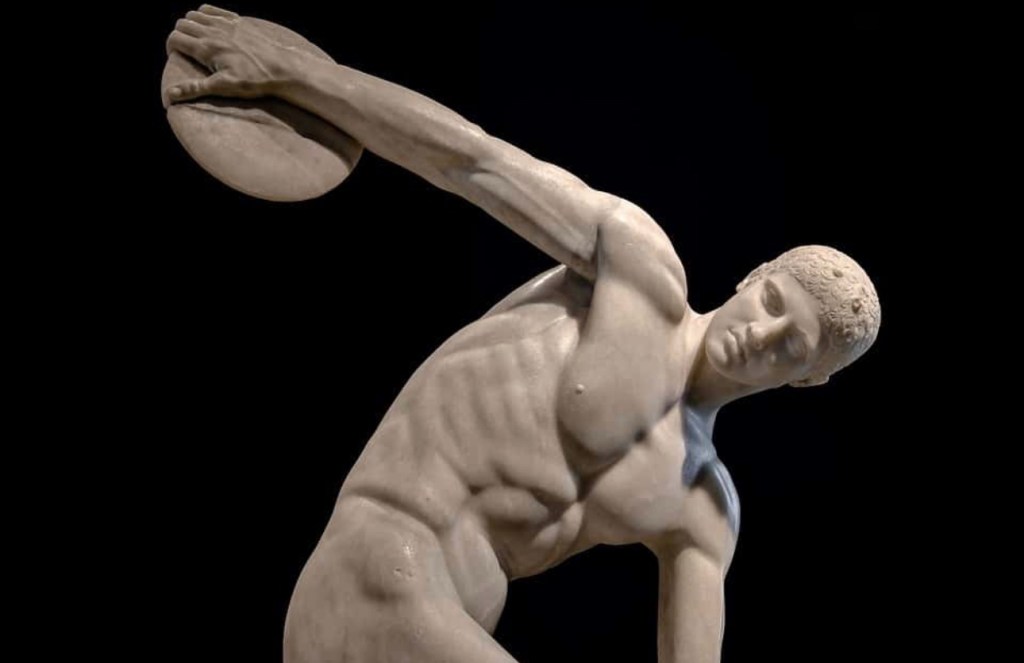
At the various sites of festivals, the populous honoured the local god or goddess. Individuals from various city states performed in these competitions. Poets gave poetic oration to great applause (or derision), musicians gave renditions on double flutes called aulos’ in huge acoustic temples and was enjoyed by audiences. These difficult flutes are like oboes with a chanter and a complementary drone note like the bagpipes which was played in a outdoor portico temple that had an echo. The temple of seven echos would have been an incredible experience. Sculptors produced beautiful works of art of gods or athleticism. The Discus Thrower is a Roman replica by a Greek sculptor as many sculptures did not survive the earthquake susceptible area. It shows an artistic understanding of the male body with anatomical precision. Stalls were offering food and wares. The holy site was busy with people honouring the gods and making burnt offerings at alters.

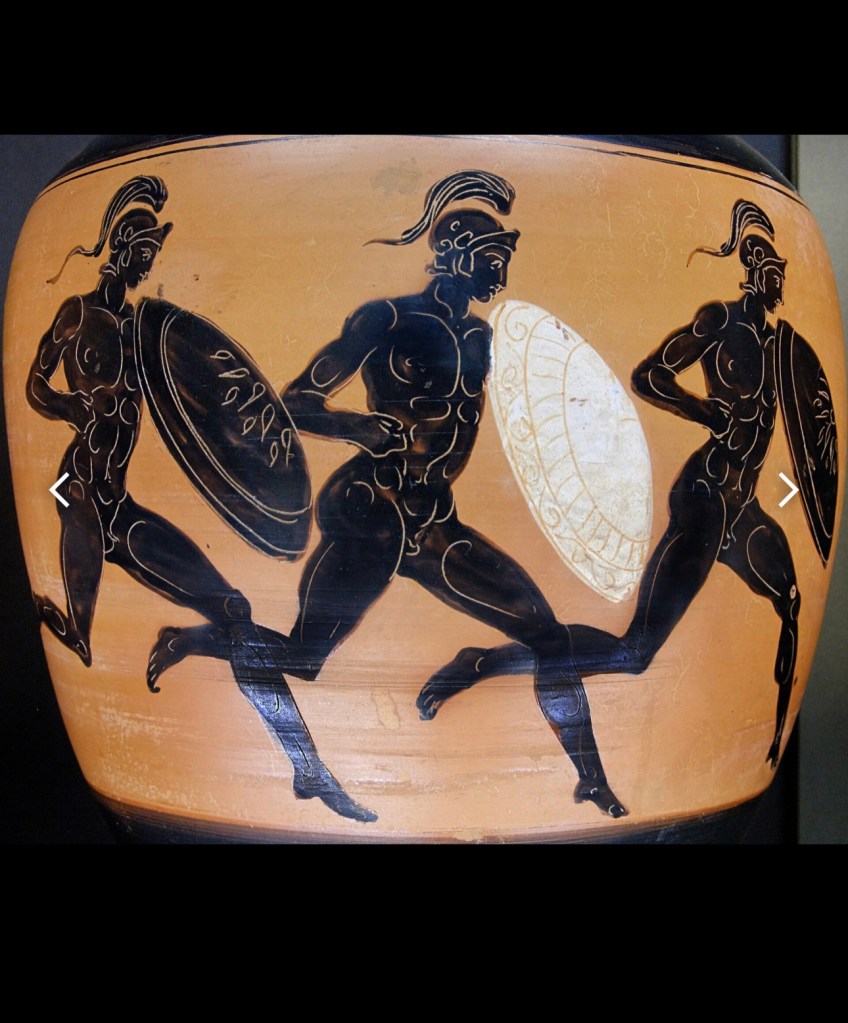
Militaristic athletic challenges, where skilled soldiers competed and showcased their Adonis-like bodies, also were held at these sacred sites. Each event had a direct correlation to a military aspect of battle. This part of the religious festival became the events well-known today in the modern Olympics, restarted by Baron Pierre du Cobertin in 1896.
The cooperation needed to host these festivals, so participants and citizens could attend, subsequently helped to defend their way of life by the practice of Ecechiria or an Olympic truce.
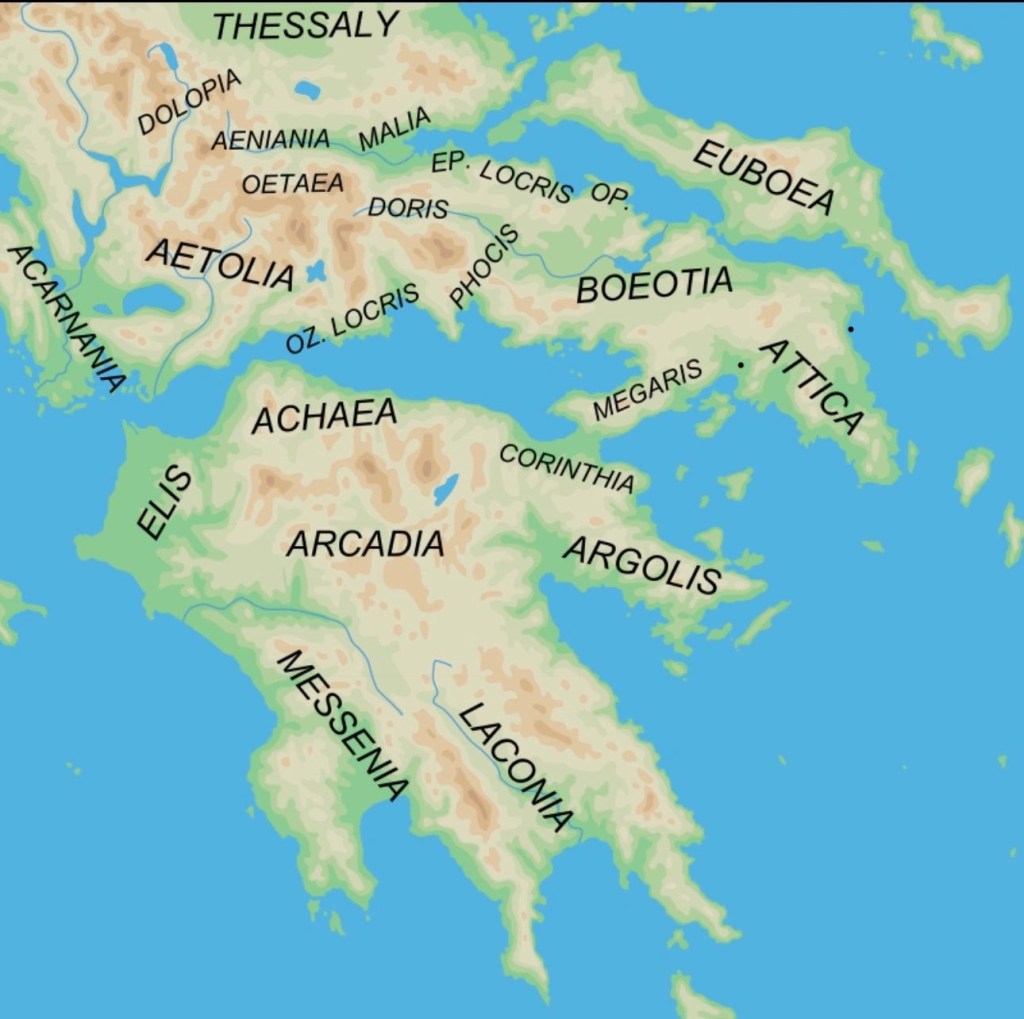
The tiny countries of this era, of what is now Greece, is geographically complicated. City states were established on islands plus on all of the bizarre shaped peninsulas. Every geographical area that had a natural defence created a small nation. Travelling through so many countries was not possible without a truce.
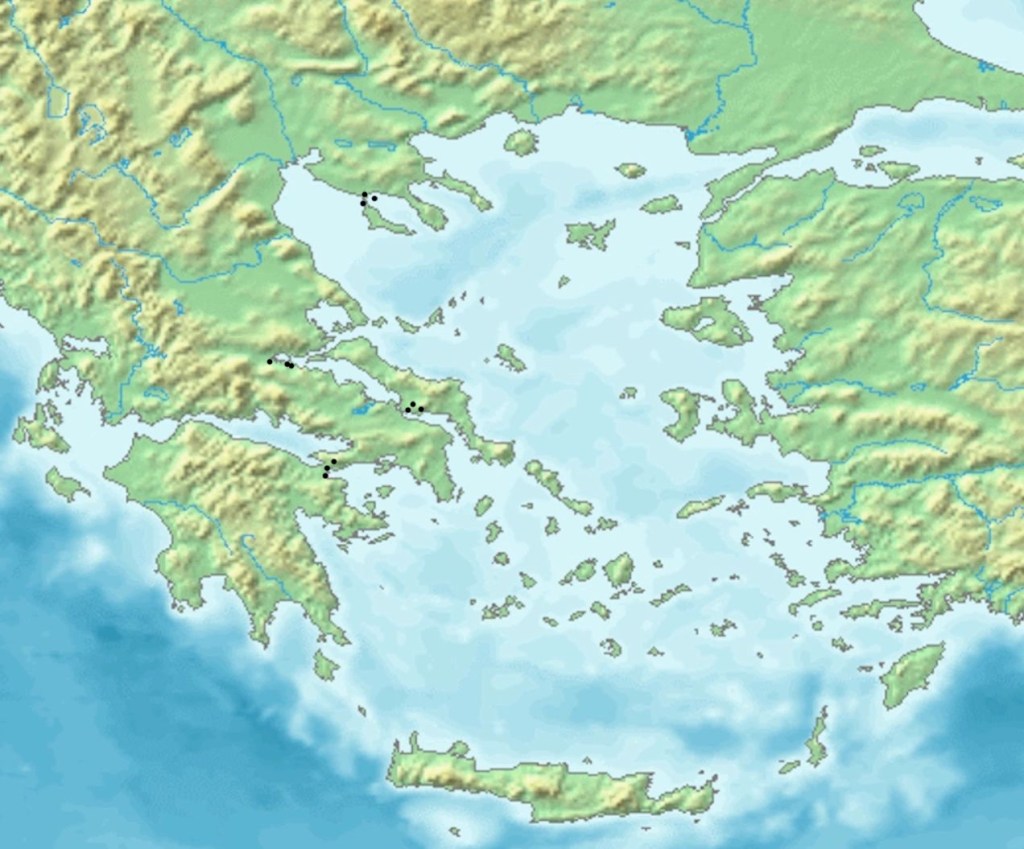
Prior to a festival, a herald was sent by the city-state hosting the festival, to all other city states, declaring an ecechiria. Breaking a ecechira or holy truce, would be like karmic suicide. Bad luck would ruin a city. It would require a shamanistic-style cleansing to fix such a stupid manoeuvre as breaking an olympic truce. Huge fines were also levied if a truce was broken.
The ecechira permitted travel but also unexpectedly established mutual cooperation that later became essential when the area was attacked by Zoroastrian Persians.
Olympia hosted the festival to Zeus every quadrennial which was the biggest and most important festival. Delphi hosted the Pythian festival to Apollo, Isthmia a festival to Poseidon and Nemea to Hercales. Another eight major festivals also were hosted throughout the area. Athens city-state alone had 120 festival days per year.

Colonies created by Greek city-states spread Greek religion and customs. It brought the diverse population from around the Mediterranean together through commerce and festivals. The Greek city-states became exceedingly wealthy. They had leisure time and used it well. This was the time of Pythagoras, Plato, Socrates and Aristotle to name only a handful.
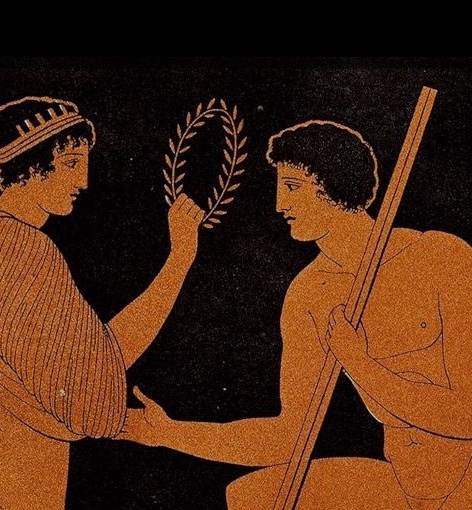
At the Olympic festival winners were presented with a sacred olive wreath from the sacred wild olive tree. It was among the most prized possessions anyone could attain; equal to the highest honour a General could attain. Olympic wreaths were even prized by Kings. Philip II of Macedonia won an olive wreath in the chariot race and must have influenced his son in the importance of athleticism. His son: Alexander the Great. Who went on to conquer the entirety of the Persian empire after 336BC. Maybe a bit of payback for Persian vasalitude during Greco-Persian wars? The importance of the Olympic games was immense, it allowed the tiny countries to become wealthy but also the privacy of independence.
When the Persian empire, the largest empire the world had ever seen, decided to take the area over, the Greek city-states had to cooperate. Two of the larger city-states of Attica (Athens) and Eritrea had recently assisted an Ionian (Turkish coast) revolt against Persia to take Iona back into their commercial orbit. So the Persians came for revenge.

The time came for city-states to work together in 490BC. The Persian Empire arrived from the north, travelling first through the area now called Turkey, neutralising Thracian and Macedonian countries as vasal states on their way. The Persian King Darius I then headed south and completely enslaved the city of Eritrea for its role in helping the Ionians, burning the city to the ground, killing every adult male and sending the entire population to Babylon barefoot. Darius I had a straightforward style; give up or die. His all-or-nothing strategy… was called ‘heaven and earth’. The Athenians threw the Persian messenger, asking them to give up and become a vassal state, into a well. They were not willing to give them heaven and earth.
After Eritrea was sacked, the Persians moved on to the city-state of Attica (Athens) near Marathon to fight the Athenian cooperative army. The Athenians needed help and got it. It was the competitiveness and cooperation that brought other city-states to help which helped to create such an unexpected outcome.
In this first phase of the two part war, the Persians battled the Athenian combined army. This allied group won by overwhelming with athletic force, flanking them and pushed them back into the sea towards their ships. The Persians outnumbered Greeks by 4:1. Part of the Persian force had been sent to round the peninsula to attack Athens. Then the Athenian army ran from Marathon to Athens, a distance of 40km, beating the Persian ships. The myth of a messenger dying after running from Marathon to Athens is mostly debunked because messengers of the time were important and did distances of up to 100km. The Spartan army, one of the city-states who were asked to help, arrived late to Marathon, because they were at a local festival and had to wait on the full moon, they had marched 240km in three days! The run from Marathon to Athens by armoured personnel is more likely where the marathon story came from.
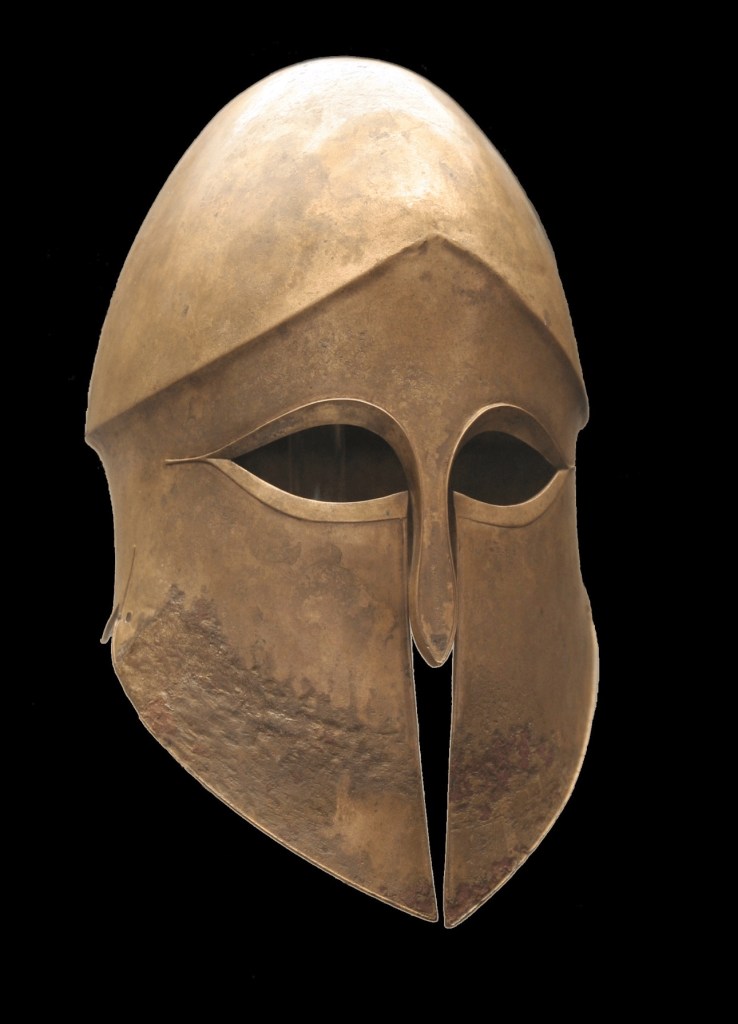
City-states fought with armies of heavy infantry called Hoplites. Their craft of running and fighting had been honed for generations, fighting each other in Festivals in the various games, as well as on battlefields. When the Persians arrived around 490BC, it was almost 300 years since the first Olympia. Persians were not ready for this group of high performance athletes.
The Persians had walked-over more than twenty-four other countries, not small countries but large ones like Egypt, so they weren’t too worried about these wealthy tiny city-states who had supported the Ionian revolt. In fact they probably seemed ripe for picking. The Persians were sent home with their first great loss.

Ten years later, the Persian army came back to Athens and they brought an even bigger army and navy. A military juggernaut of one-hundred-and-fifty thousand! The Persians did not plan to be sent home a second time like Xerxes’ father Darius. The Persians didn’t seem to realise they were fighting a system of athleticism created by competition and cooperation.

In the second phase of the Greco-Persian wars, the Greek’s allied army, from nine main city-states, lead by Spartan General King Leonidas, had an army of 7000 men. The Greeks used a pinch point at Thermopylae and manoeuvred to meet the massive army there.
At Thermopylae they held off the entire force of the Persians who sent wave after wave of their armies, not gaining any ground against the phalanx of Hoplites. Xerxes even sent his elite force ‘the Immortals’ who also failed. The competitive nature of this allied army could not be beaten in a smaller more equal battle and for three days they held.
The Persians were tipped off about a mountain pass trail and were on their way to flanking the allied force. The Spartan General had already sent the majority of his allied army back to the Corinthian isthmus, to another pinch point like Thermopylae. To cover their strategic retreat, Leonidas then held off the Persian army with his elite squad of 300 Spartans plus 700 Thespians. This gave the majority of his army time to get to the isthmus at Corinth to set up once again. This elite group of Spartans and Thespians fought until all their armour was destroyed, Poets immortalised this last-stand battle that didn’t end until the Spartans fought with hands and teeth but ultimately were defeated. Leonidas was worshipped like a god by the Spartans after the battle of Therapae.

Although the Persians were able to sack Athens after Thermopylae they could not defeat the Greeks at Corinth so they never conquered all the states and had to return home or have their way back cut off.
The ancient festivals like the ancient olympic games were an immensely popular event across the entire Greco world. It’s popularity forced the myriad of city states to cooperate together by an echetria. The festivals improved the societies of the Greeks by multiple ways but importantly it allowed the cooperation to defeat the Persian Empire. The athletic events, all conducted in the nude because a perfect body was honouring the gods, not only showed off their godlike physique but honed their military skills.
The Greek Olympia festival continued and lasted for 1000 years. Over that time-frame Greek philosophy and Greek culture grew strong. We don’t have to look far to see their influence in art, literature, sculpture, astronomy, democracy, libraries, mathematics, medicine, theatre and of course the revival of the Olympic Games.
Ironically the festivals were finally discontinued by the Romans when they switched to the monotheistic religion of Christianity which was one of the Abrahamic religions. Abraham travelled from Persia (Ur) which was a monotheistic religion called Zoroastrianism.
Do you want to join in the discussion with Gary? Join in his Skool and get started: https://www.skool.com/performance-swim-strokes-6754/about


 swimcoachingblog
Thank you coach Gary, I live for swimming, my brother took me to the local HS in NY and have loved it ever since. Thanks.
LikeLike
Swimming is a wonderful thing. Thanks for the comment. Gary
LikeLike